Hajime no Ippo: The Fighting!
Tyson, Hearns, Durán. All in One Cartoon.
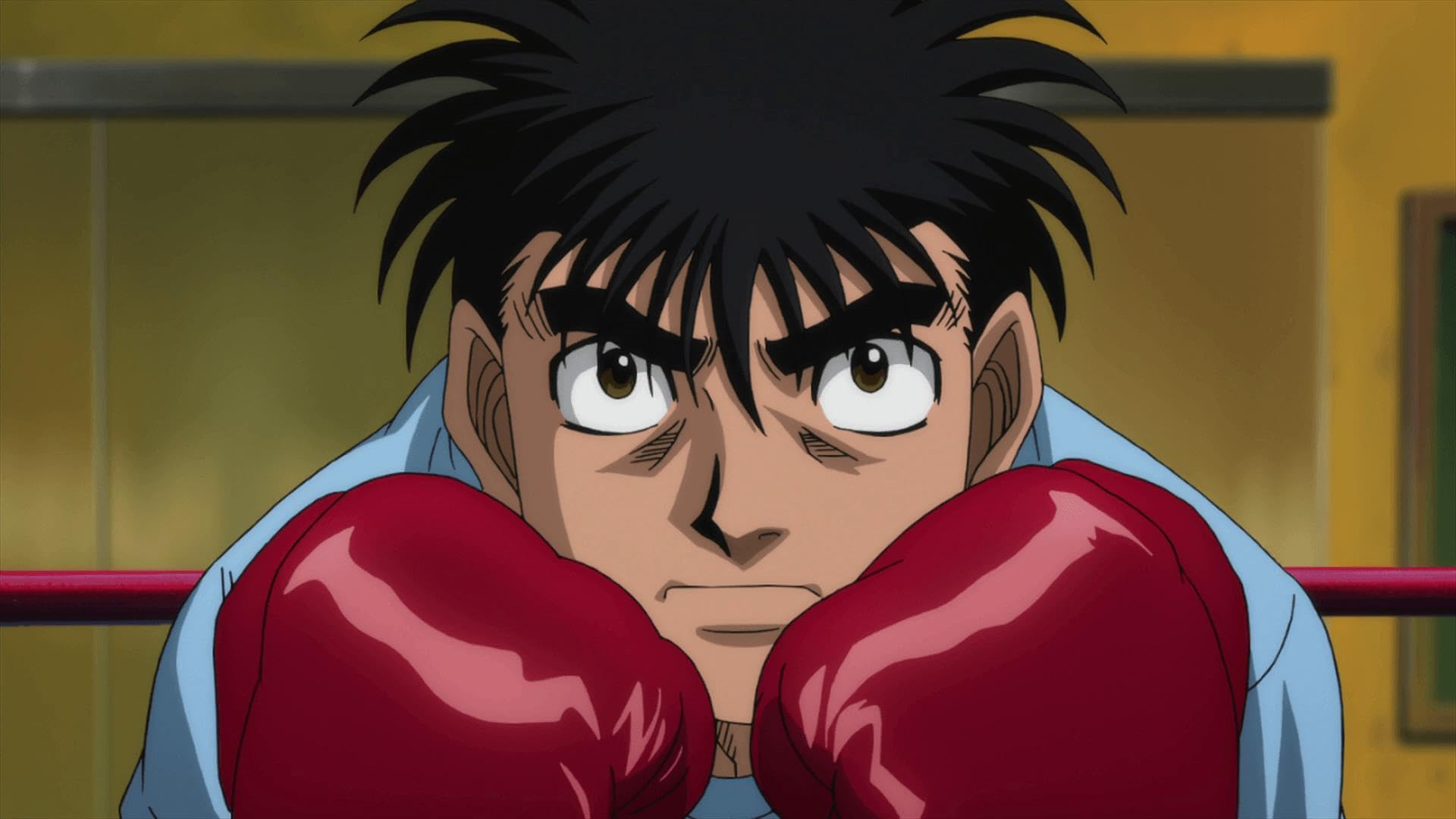
I cannot just say that I watched Hajime no Ippo a lot. It would be a lie. I watch it all the time. It's one of these shows that I keep coming back to. While other people might prefer re-watching Friends every year or King of Queens. This is my go-to show to get hyped before a workout or to get ready for the day.
(As you can see from my old Instagram stories)
Tyson, Hearns, Durán. All in One Cartoon.
But can you blame me? It's a show full of boxing references, not only because it's about boxing, but because the creator went out of his way to educate the reader or viewer about the sport in general. The history, the fighters, the techniques: it's all there, wrapped up in the personal story of a young man who is fighting his way through life. Quite literally.
And no, the subtitle of this article, or even the heading of this paragraph, is not clickbait. You will hear their names mentioned, see their techniques used, and even find entire characters built around them.
That is the first thing to understand about George Morikawa's series, which has run in Weekly Shonen Magazine since 1989 and now sits in front of a whole new audience on Netflix. It is not a boxing story. It is a love letter to the entire sport, written by a man who clearly loved it and never stopped studying it.
So don't worry too much about whether this anime is for you, especially if you don't like anime in general. The real question is: should you give it a try anyway? And the answer is a clear yes. It holds up far better than you might imagine, with some gloriously dumb exceptions, of course.
The card behind the cartoon
And it doesn't stop with Ippo, the protagonist, who is heavily inspired by Mike Tyson and uses the famous Cus D'Amato peek-a-boo style. Mashiba is a clear tribute to Thomas Hearns and Miyata reflects the style and philosophy of Sugar Ray Leonard.
Even specific punches and rivalries seem to be drawn from boxing history. For boxing fans, that's part of the magic. The more you know about the sport, the more the series reveals.
The Dempsey Roll is real history
Ippo's signature move is the Dempsey Roll, and a lot of people who haven't watched much boxing assume it's just some anime superpower. It isn't.
Jack Dempsey genuinely fought like that. The weaving, the constant shifting of weight, loading up hooks from side to side while moving forward. He even wrote about the mechanics himself. Morikawa didn't invent the Dempsey Roll. He dug it out of boxing history.
What I love is that the show also understands why you don't see many fighters using it anymore. As boxing evolved, guys got faster, sharper, and much better at timing counters. The same movement that makes the Dempsey Roll dangerous can also make it predictable if your opponent knows what he's looking at.
Then you have Mike Tyson, who openly studied Dempsey and brought a lot of those ideas back into modern boxing. Different style, different era, but you can clearly see the family resemblance.
That's kind of the story of Hajime no Ippo in general. The show doesn't just throw boxing terminology around because it sounds cool. It understands where these techniques came from, why they worked, and what their weaknesses are. Half the time you're watching an anime. The other half you're getting a surprisingly good boxing lesson.
IT is not all fun and games
Here's another thing about the anime that fascinates me: its depiction of the brutality of the sport. And I don't just mean the obvious violence. I mean everything that comes with the determination to become the best.
The grueling training sessions. The personal life that sometimes has to take a back seat. The health concerns in every facet of the word. The sacrifices, the obsession, and the price fighters are willing to pay in pursuit of greatness.
And it's a theme that becomes more and more prevalent as the series goes on. While it might start with the hunger pains of making weight, a damaged hand, or a sprained ankle, it gradually begins to explore much more serious subjects.
Why IT LANDS FOR ME
To put it simply, it just motivates me. There is something deeply satisfying about watching people dedicate themselves completely to their craft. I love seeing the slow progression of a fighter, the small improvements that add up over time, and the constant pursuit of becoming better than they were yesterday.
It feels real and raw, even though it can be downright ridiculous at times. The punching power is exaggerated, and the fighters occasionally seem almost inhuman in how much damage they can absorb. It's over the top, but to me that's a deliberate stylistic choice.
Because how else do you convey the level of hunger, obsession, pain, and sacrifice that drives someone down the path of becoming a fighter? The series turns those emotions up to eleven, not because it's trying to be realistic in every moment, but because it's trying to make you feel what the characters are experiencing.
"Not everyone who works hard is rewarded. But! All those who succeed have worked hard." - Coach Kamogawa
And should you watch it? I think so! I even named my dog Ippo.